Melt value
The theoretical value of your gold content at the selected spot price. It excludes workmanship and seller premiums.
Calculate Miami Cuban chain gold value, estimate what you might pay, or model what a gold buyer might offer.
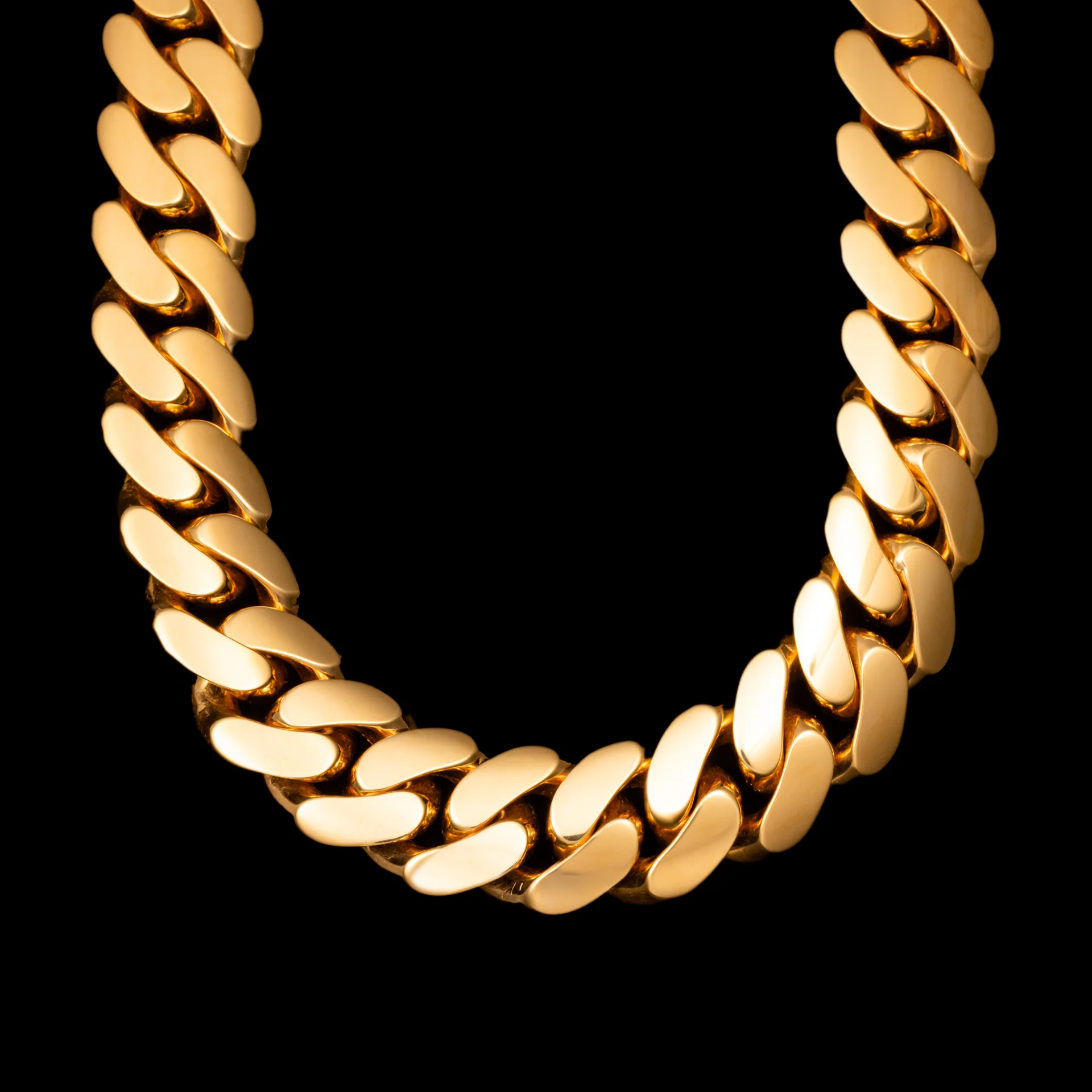
Illustrative yellow-gold colors · dimensions and alloy color may vary.
Melt value ≠ the check you get. This is the value of the gold itself at today's market price. A scrap buyer may deduct fees and margin; a retailer may add labor, overhead and profit. Use the buying or selling view to model the amount relevant to you.
This is not a listed selling price. It adds your chosen example premium to melt value. Enter an actual seller quote below to compare a real price.
Pre-tax scenario, not a seller quote. The premium can include labor, overhead, brand and profit; their individual amounts cannot be inferred from a price. Enter your own percentage or a real pre-tax quote.
What might a gold buyer pay you? Choose an example percentage of melt, then subtract only fees not already included in that percentage. This models a scrap offer; a resale offer for an intact chain can differ.
This calculator does not buy or sell gold. Obtain actual offers and confirm weight, fineness and fees with each buyer.
Illustrative solid-chain model, not a manufacturer quote. Actual link profile, clasp and construction change weight. Use a measured weight whenever available. The range reflects variation across published maker specifications; it is not a guarantee.
Weight × gold purity × spot price per gram. Excludes stones and non-gold components.
The theoretical value of your gold content at the selected spot price. It excludes workmanship and seller premiums.
Gold value plus craftsmanship, overhead and margin. Compare the quoted price per gram and premium over melt.
A buyer may deduct refining costs and margin. Condition, brand and resale demand can also affect an offer.
We use nominal karat fractions: 14K is 14/24, or about 58.33%. A 585 hallmark means 58.5%; use tested fineness for an exact valuation. One troy ounce is 31.1034768 grams.
The chain detail and bust images are style references. Karat colors are illustrative. Images do not predict length, width, weight or construction.
The checker measures the premium above metal value. It does not authenticate jewelry or determine whether craftsmanship, condition and seller service justify a price. Use a pre-tax quote for a like-for-like comparison.
Enter the measured weight and selected gold spot price. This calculator uses 14/24 (about 58.33%) for nominal 14K. The gold-content value is weight × purity × price per gram. A 585 hallmark represents 58.5%; exact valuation requires the actual fineness.
Select “I’m buying a chain,” then open “Estimate store price + premium.” Adjust the percentage or enter a real seller quote. The result separates metal value from the added premium; it does not certify a fair market price.
Select “I’m selling my gold” to model a buyer’s percentage of melt and any additional fees. The 90% starting value is an editable example, not a prediction. Private resale and collectible jewelry can follow different pricing.
A finished chain can include labor, clasp design, finishing, seller overhead, branding and profit. The premium over melt measures their combined price difference. It does not reveal the store’s rent, expenses or net profit.
Premium in dollars = seller quote − melt value. Premium percentage = (seller quote ÷ melt value − 1) × 100. This differs from gross margin, which uses selling price as its denominator. Compare pre-tax quotes on the same basis.
Divide the seller’s pre-tax price by total chain weight. Compare chains with the same karat, construction and relevant design features. The quote checker displays the quoted price per gram alongside the selected karat’s metal value per gram.
Nominal purity is karat ÷ 24: 10K is about 41.67%, 14K about 58.33% and 18K 75%. At the same total weight and spot price, higher purity means more gold content. Alloy color and durability also depend on composition and construction.
At identical measured weight and purity, the gold-content calculation is the same. Hollow and semi-hollow chains can weigh less at the same outside dimensions. The dimension-based builder currently models solid chains only; use a measured weight for hollow pieces.
Wider and longer chains generally contain more material, but thickness, link spacing, profile, alloy density and clasp change the result. Width and length alone cannot determine exact grams. The builder is calibrated against published handmade Miami specifications (for example, a 12mm 14K 24-inch solid chain at about 265 g); individual makers vary, which is why the estimate is shown as a range.
Measure overall length laid straight from clasp to end, and width across the widest link face. Weigh the chain on a suitable jewelry scale. Remove separate pendants and account for stones or non-gold components before using their weight as gold alloy weight.
A troy ounce is 31.1034768 grams; one pennyweight (dwt) is 1.55517384 grams. A regular household ounce is a different unit. Choose the unit printed on your scale; this calculator preserves weight when you switch between its supported units.
14K describes nominal karat purity. A 585 fineness mark specifies 585 parts of gold per thousand, or 58.5%. The difference matters for precise valuation. A stamp by itself does not verify authenticity or replace testing.
Melt value covers the entered gold-alloy weight and purity only. The buying scenario is pre-tax and excludes shipping. Do not value diamond weight as gold; gemstones and separate components require their own assessment.
No. This website provides calculations and editable scenarios. The chain images are style references, not inventory for sale. Only a quote entered from an actual seller represents that seller’s asking price.
The website labels the feed status and retains the displayed editable price. A fallback price is not current market data. Enter a current reference price and confirm its currency and troy-ounce unit before comparing offers.